Pure Amla Hair Oil (100% Natural) — Anandam Ayurved (200 ml) What is amla hair oil?
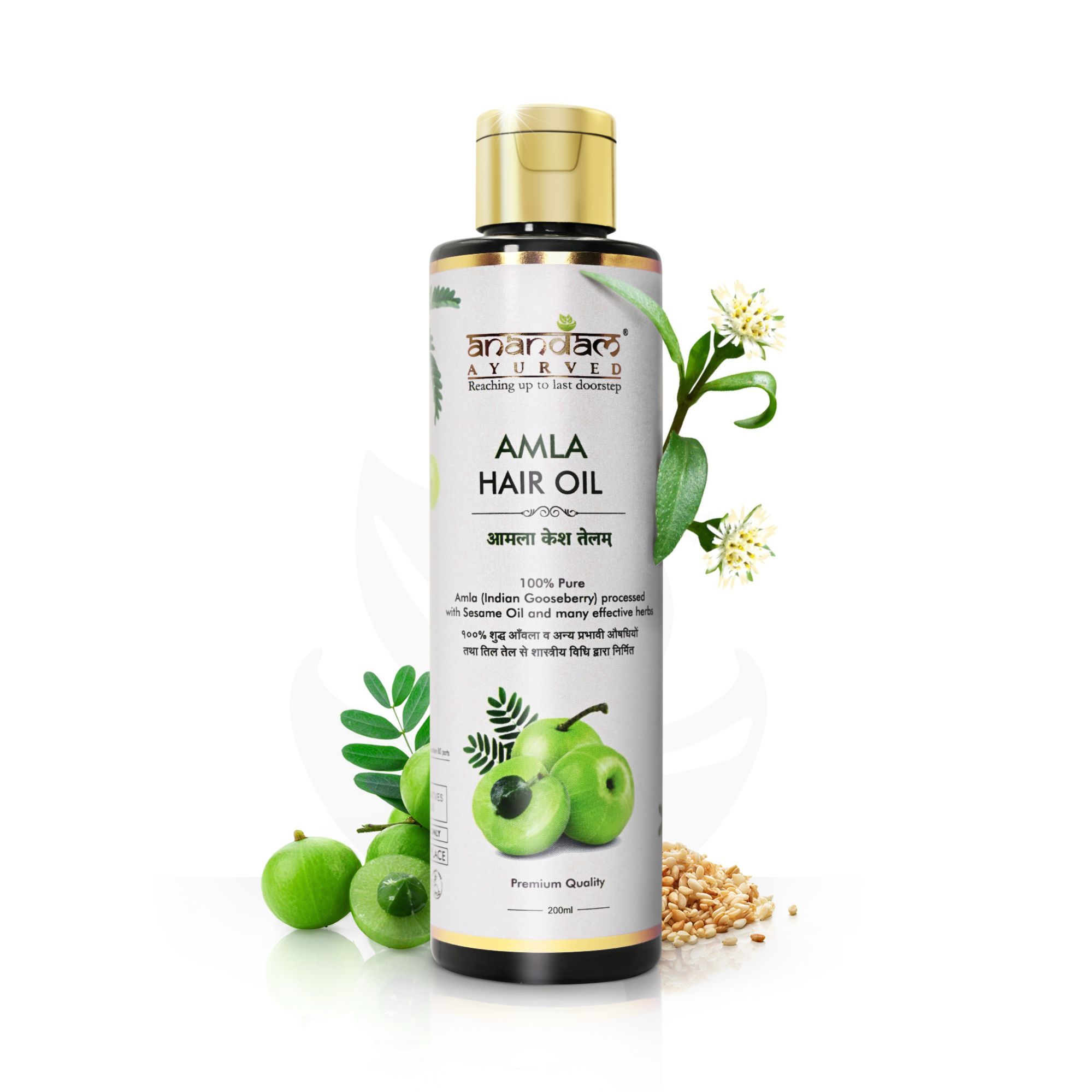
Amla (Indian gooseberry) has a long history in Ayurveda and Indian hair-care traditions. In hair oil form, amla is typically infused into a base oil so the scalp and hair can be conditioned with:
- fatty acids from the carrier oil(s),
- amla’s naturally occurring plant compounds (commonly discussed for their antioxidant nature),
- and any supporting herbs added to the blend.
Why people use amla oil for hair care
Amla hair oil is most commonly used as a scalp-conditioning and hair-length nourishing oil. People usually reach for it to support:
- Dry scalp comfort (helps soften and reduce the “tight” feeling of dryness)
- Hair shine and smoothness (oil helps reduce surface roughness and frizz)
- A more conditioned feel on the lengths, especially for dry or textured hair
- A traditional pre-wash routine that reduces dryness after shampooing
Important note: hair oil can improve feel and manageability, but it is not a guaranteed treatment for medical scalp conditions. If there is persistent itching, flaking, redness, or hair loss, consider a dermatologist consultation.
Typical ingredients in “pure amla” hair oils (and what each does)
Because the product page content couldn’t be loaded here, the exact ingredient list isn’t confirmed in this draft. Below is a practical guide to the ingredients commonly found in amla hair oils, and how each usually functions in a formula:
Amla (Emblica officinalis) extract / infusion
- Traditional use: scalp and hair nourishment
- Common role in oil: the hero botanical infused for plant actives
Carrier oil (base oil)
Most amla oils use one or more of these:
- Coconut oil: rich, deeply conditioning feel; can be heavy for some scalps
- Sesame oil: classic Ayurvedic base; nourishing, warm feel
- Almond oil: lighter slip; supports softness
- Sunflower / rice bran oil: lighter texture; good for daily-use preference
- Castor oil (sometimes): thicker; often used in small amounts for a dense, coating feel
Supporting herbs (may or may not be present)
- Bhringraj: traditionally used for scalp and hair-care routines
- Brahmi: traditionally used in head massage oils
- Hibiscus: commonly used for softness and conditioning feel
- Fenugreek (methi): often used for slip and scalp comfort
- Neem: commonly used in scalp-cleansing routines (can be strong in aroma)
Fragrance / essential oils (optional)
Some “natural” oils still include essential oils for fragrance. If you have a sensitive scalp, patch testing matters.
Quick checklist: what to look for on the label
- A clear ingredient list (INCI or common names)
- Whether it is mineral oil-free (if you prefer purely plant oils)
- Whether it contains added fragrance or essential oils
- Any allergen info (nut oils, perfume components)
Texture, scent, and feel (what to expect)
Most amla oils:
- range from medium to rich in texture,
- have an herbal/earthy aroma (or perfumed if fragranced),
- can feel heavier when applied at the scalp if used in large quantities.
If your hair is fine or your scalp gets oily quickly, using less oil and applying mainly to the mid-lengths can work better.
How to use amla hair oil (practical routine)
1) Pre-wash scalp + lengths (classic method)
- Part hair and apply a small amount to the scalp.
- Massage gently with fingertips for 3–5 minutes.
- Smooth a little oil onto lengths and ends.
- Leave on 30–90 minutes, then shampoo.
2) Overnight oiling (for very dry hair)
- Use a small amount (so it doesn’t clog follicles or feel too heavy).
- Protect pillowcase.
- Shampoo thoroughly in the morning.
3) “Ends only” seal (for frizz-prone lengths)
- Rub 1–3 drops between palms.
- Apply only to ends on damp hair.
Who might like it (and who should be cautious)
Might like it if you have:
- dry, dull hair
- frizzy or textured hair
- a dry-feeling scalp (without active irritation)
Use caution / patch test if you have:
- very sensitive scalp
- fragrance sensitivity
- active dermatitis, psoriasis, or severe dandruff
- acne-prone scalp (heavy oils may worsen follicle congestion for some)
Storage and shelf life basics
- Keep the bottle tightly closed, away from direct sunlight.
- If the oil is herb-infused, cloudiness can occur; check for off smell or rancid notes.
- Use within the period-after-opening (if mentioned on label).
Common questions
Does amla oil regrow hair?
Hair oil can improve conditioning and breakage management, which helps hair look healthier and may reduce breakage-related thinning. True hair regrowth depends on many factors (genetics, nutrition, hormones, scalp health), so results vary.
Can I use it after shampoo?
Yes, but use a very small amount on ends. Scalp application after wash can feel greasy for many hair types.
How often should I use it?
Most people use it 1–2 times per week as a pre-wash oil. Daily use can work if the oil is light and you use minimal quantity.